Saturday, June 4, 2011

June 3: Kyoto Caravan at Kesennuma's Akaiwa Children's Center

This morning, we brought the Kyoto Caravan to the Akaiwa Children's Center, and put up our stalls with pongashi popped rice, takoyaki dumplings and watagashi cotton candy.
This center serves as a daytime facility in which mothers with young children can spend some hours, play with the children, and get guidance and counseling. After the earthquake and tsunami, the center has become a vital place where mothers with young children who have lost their homes and who now live in shelters or in makeshift homes as well as those whose houses were safe can come together and spend some hours in a peaceful environment. 


A poster written by the children to announce the coming of the SWTJ Kyoto Caravan.


After enjoying the event, the children brought back bags of SWTJ popped rice to friends and family in shelters.


This is good!


While we were at the center, many people gathered from the vicinity and were happy to bring home takoyaki dumplings, popped rice or cotton candy to their families or friends in shelters, makeshift homes, or other places. Events in places such as this Children's Center allow us to reach out to a large number of people affected by the disaster in an unobtrusive way.
We thank the friendly people of the Akaiwa Children's Center for their warm support.

Text and photos: Kanazawa Daisuke
(translated by B.Y.)


June 2: Providing meals at the Kofukuji shelter

Tonight, we provided meals at the Kofukuji shelter in Kesennuma. About twenty people still live in this shelter. Many of them have applied for makeshift homes, but none of them have yet been awarded one. People who can enter makeshift homes provided by the government are selected by lottery. The number of makeshift homes built in a hurry after the earthquake is still way below the number needed. People who don't win the lottery and who haven't found a place at the home of relatives or elsewhere, keep living in crowded shelters. 


SWTJ at work in the shelter

Many of the people who live in the small-scale shelters  (groups of between 10 and 100 evacuees living in schools, temples, or gyms) visited by the SWTJ Kyoto Caravan are exhausted after having lived in  these crowded places for nearly three months.  They do take turns cooking,  but making meals for so many people every day is tiring. Many of the evacuees cannot serve in the kitchen since they commute to work from the shelters.
As a result, many shelters serve cold meals out of donated boxes which contain food such as canned fish or rice balls. A warm balanced meal by volunteers once in a while is not only a welcome treat for all, but also a much needed break for those who have cooking duty in the shelters.


The shelter invited people in the neighborhood who still also do not have access to nutritious food to come and share the meals we prepared. In this shelter, we gave out meals for about fifty people.


The cotton candy was as popular as always! Kids love to try to make their own. A kindergarten teacher we met hoped that we would come back in summer for the summer festival.

Text and photos: Kanazawa Daisuke
(translated and edited for the English version by B.Y.)


Friday, June 3, 2011

June 2: Home-made pon-gashi popped rice for kids at Tsukidate Elementary School

This morning, we went to Tsukidate Elementary School in Yasse, Kesennuma, and showed the kids the traditional way of making pongashi popped rice. This school is located in the hills of Kesennuma, an area that remained without water and electricity for more than a month after the disaster struck. Among the staff working at the school, there are many who have lost family, friends acquaintances, or homes. However, everybody invited us in in the cheerful and welcoming way of the local people.


The school's kids are told to beware of the loud bang of the pongashi machine!


Oops!! The pongashi machine has spread some of the popped rice all over the place. The kids are quick to help gather it. Then the fun continues with home-made cotton candy:


Our cotton candy is popular with both teachers and kids. There are three different tastes, and the kids love exchanging the sweet treat. Lots of smiles today.

We thank the staff and children at the Tsukidate Elementary School for their warm welcome.

Text: Kanazawa Daisuke
Photos: Beatrix Yoshikawa
(translated by B.Y.)


Thursday, June 2, 2011

June 1: Providing meals at the Karakuwa Elementary School shelter

In Japan, many elementary schools and junior high schools are  designated as official evacuation centers in the event of a disaster. Karakuwa Elementary School too has served as a shelter for evacuees since after the earthquake and tsunami of March 11. While many have left since, there are still around 50 evacuees who live in some of the classrooms assigned to them for shelter. Right next to them, in the same building, elementary students go to school, use the gym, and go about their daily tasks.


We prepared the meals beforehand, but were able to use the Karakuwa Elementary School kitchen for the last touch. Thank you!


Distributing the meals at this school was really quick! The people in the shelter have way more practice then we have, and gave us a hand!


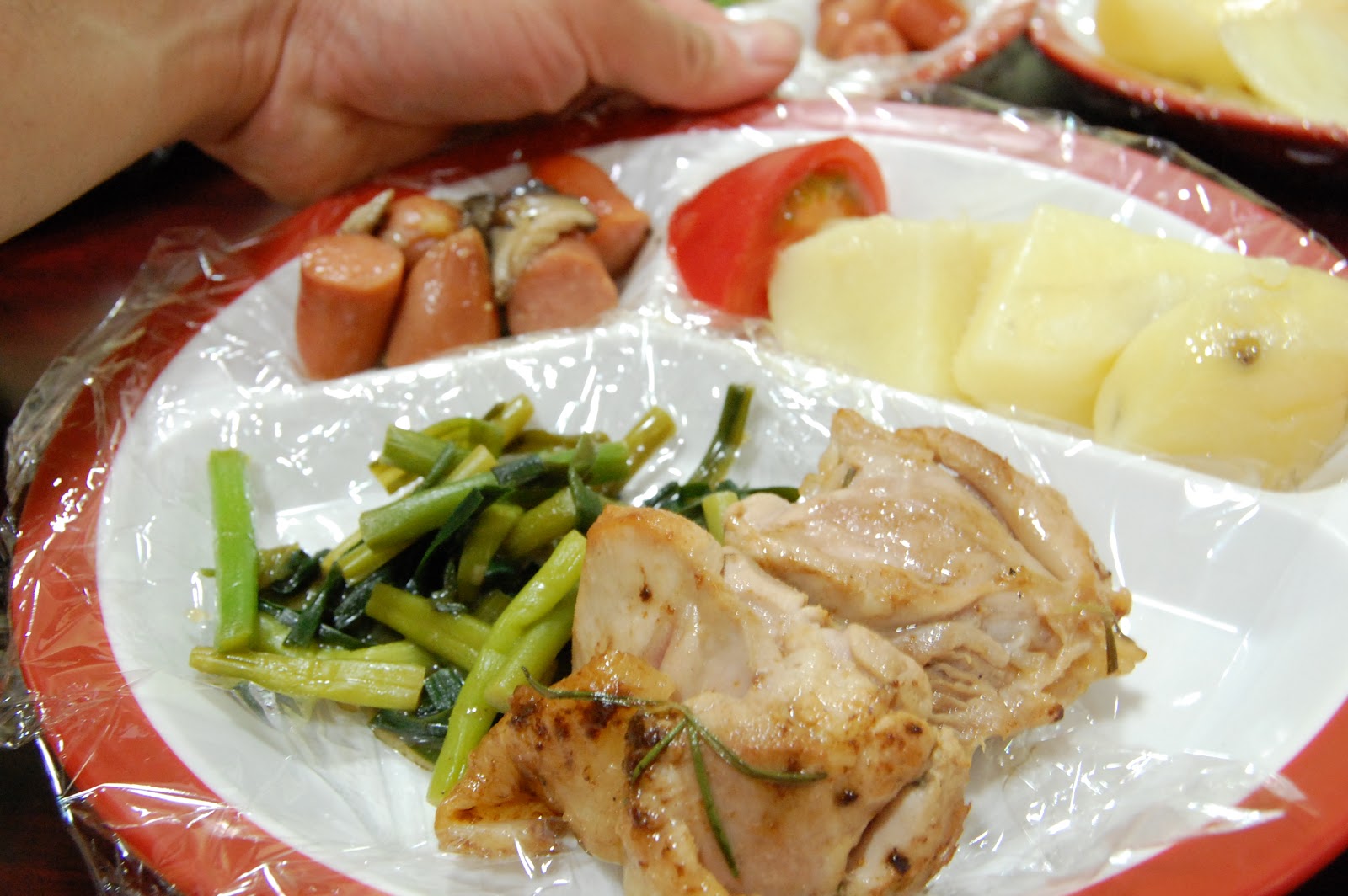
SWTJ contacts shelters in advance and gathers information on the number and kind of meals to be provided. In this shelter, we were asked to provide a viking-style variety of dishes. The menu also included soup, and was well received. In this shelter, evacuees have created a system to reuse paper plates: they use plastic wrap to cover the disposable plates. This allows them to reuse the same plate a few times. In many shelters, kitchens are still not equipped with appropriate dishwashing facilities or sewage.


For dessert, we featured our special cotton candy.
It was a hit with everybody, especially the elderly!

We thank the people at the school for their warm welcome.

Text and Photos: Kanazawa Daisuke
(translated and edited for the English version by B.Y.)


June 1: SWTJ morning event at Furumachi Child Welfare Center

Early in the morning, we delivered a box of popped rice to Tsukidate Elementary School as we had promised the day before.


The person on the right is the head of the school.


Next, we were off to Furumachi Child Welfare Center

The SWTJ Kyoto Caravan sets up stalls for takoyaki dumplings, popped rice, and cotton candy.


The takoyaki dumplings have many fans!


The big bang of the pongashi popped rice machine frightens a few kids away, but everybody soon gathers again to try the sweet treat.


Many of the traditional regional spring and summer festivals in Tohoku have been cancelled this year due to the disaster. The staff and parents at the center were delighted to have this small event instead, and hoped we would be back in the summer.  

Our heartfelt thanks to the people of the Furumachi Child Welfare Center.

Text and photos: Kanazawa Daisuke 
(translated and edited for the English version by B.Y.)

Wednesday, June 1, 2011

June 1: A busy day for SWTJ and the Kyoto Caravan

Wake-up time at the former (old) Tsukidate Elementary School is 6am. Next to the school, a camp site has been set up for the volunteers streaming into the region from all parts of Japan.
Today, we delivered bags of popped rice to the nearby school as promised earlier, and then came back to the volunteer camp to help with morning cleaning and to make coffee for all. Early morning is the time when volunteers can exchange precious information, and tell each other about their experiences. 

Then, we SWTJ members started to work. Once the popped rice had been delivered, two members drove off to do the shopping of the day, while the remaining members started cooking for dinner. In the afternoon, we were scheduled to stage the Kyoto Caravan with popped rice, takoyaki dumplings and cotton candy at the Furumachi Child Welfare Center, and in the evening, we would provide meals at the Karakuwa Elementary School shelter. It would be a busy day!

After the event at Furumachi, we hurried back to the campsite, prepared and packed the meals, and then drove to the shelter. The menu was rich in protein and vegetables, which are usually scarce at shelters.

The people taking shelter in the Karakuwa Elementary School evacuation center are mostly from Kesennuma's Mone-district, where more than half of the residential areas have been swept away by the 3/11 tsunami. These people have a strong sense of community, and it is their strong wish to remain together, and to eventually relocate as a community to higher and safer ground. They are now trying to discuss the issue with the Kesennuma local government. Of course, the plan will take time, and most evacuees at the shelter will first have to move into one of the makeshift homes that are now under construction all over the disaster area. They won't be able to stay together during that time, since the lottery decides who can move where and when into a makeshift home. The community will be scattered during at least two years.. The road to the dream of a new small community on higher ground is tough. But the will of the local people to move together on higher ground is strong. They stress that having a plan for the future and fighting for it is the only way for them not to lose hope.

Text: Shuto Naoya@SWTJ
(translated and edited for the English version by B.Y.)

May 31: Meals and Kyoto Caravan at Jonenji shelter


About 40 people remain in the Jonenji shelter as of today.  Right after the earthquake and tsunami, this shelter was very crowded. But many people have left to live either with relatives, with acquaintances, or in makeshift homes . Very soon, this shelter will be closed. The remaining evacuees will have to move to yet another shelter.


Many children from the shelter and from the vicinity gathered for the cotton candy. There were some beautiful smiles.


Our menu included a large number of vegetables. Fresh vegetables are scarce in many shelters.

Pongashi popped rice is popular even with the very young.


At this shelter, SWTJ's Ino-san was able to meet up with a young boy he had encountered in a different shelter during SWTJ's very first mission in April! Some evacuees have had to change shelters seven or eight times since March 11.


Communication with people on the ground is an important part of SWTJ's work. Needs in the disaster area are rapidly changing. SWTJ  talks to representatives in shelters, identifies the most pressing needs, and responds  as swiftly as possible. SWTJ will also keep in contact with those who will have to move to yet another shelter soon.
We thank the friendly people at Jonenji for their warm welcome, their time, and their support!

Text and photos: Kanazawa Daisuke
(translated and edited for the English version by B.Y.)